
Dear Friend,
Less than twenty-four hours ago, multitudes of people were hovering near a screen, counting down to zero and yelling, “Happy New Year!” We’re used to time, telling time, counting time, knowing what time it is─precisely.
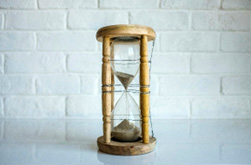
In the history of the human race, less than a thousand years have gone by since “modern” timekeeping gadgets were available. Before that, most people used the sun, the moon, the stars, patterns of weather, as well as the change of seasons, to know when to plant the crops, go to sleep, wake up, and harvest crops. People used sundials, hourglasses and other gadgets. Now, the element cesium-133 is tracked for atomic clocks, which helps us know the time more precisely. (Details from “The Dance of Time,” by Michael Judge.)
Our ancient ancestors patterned their lives around the solstices, equinoxes, and natural events. Events tied in, such as what became our modern Halloween, a carving of pumpkins as a tribute to dead ancestors, recognizing that we would all be ghosts ourselves someday. People were superstitious, setting up the calendar with uneven numbers, which were supposed to be lucky.
Milestones in human reckoning had help from people like Julius Caesar, who administered the communities of the people they conquered. They established a “calendarium,” to enable tax collection to occur on the first of the month.
Romans handled the cold, dark days of winter with superstition and penance. Caesar appointed someone to reform the calendar. Six months had thirty days, four months had thirty-one days, and the rest of the days, the sixty-one days, were in two months that were unnamed and uncounted. Their calendar was not precise enough, so that after their year accumulated enough minutes to throw off the schedule, the equinox neared New Year’s Day.
In the 1570’s, the Gregorian calendar tightened the calendar’s accuracy. The phantom sixty-one days became two months, Janus-January, and Februarius-February. Most countries adopted the calendar reform, but England (and America) finally changed in 1752. One of the major changes started the year with January instead of April.
Our world is extremely time-conscious. Even the characters in my Louisa’s Vineyard Series have a strong awareness of time, talking about the “need to make every minute count.” Louisa and Will count the days until she graduates, then their marriage, and celebrate Will’s birthday on July 4th. They track when their family vineyard has its harvest.
To experience the world of Louisa and Will, their family, and friends, check out shelleysommers.com You’ll find what a reader called one book, “Unputdownable!” I hope you agree.
And I wish you an extremely happy New Year with joy, love, happiness, fulfillment, and fun!
HAPPY NEW YEAR!
Best wishes,
